
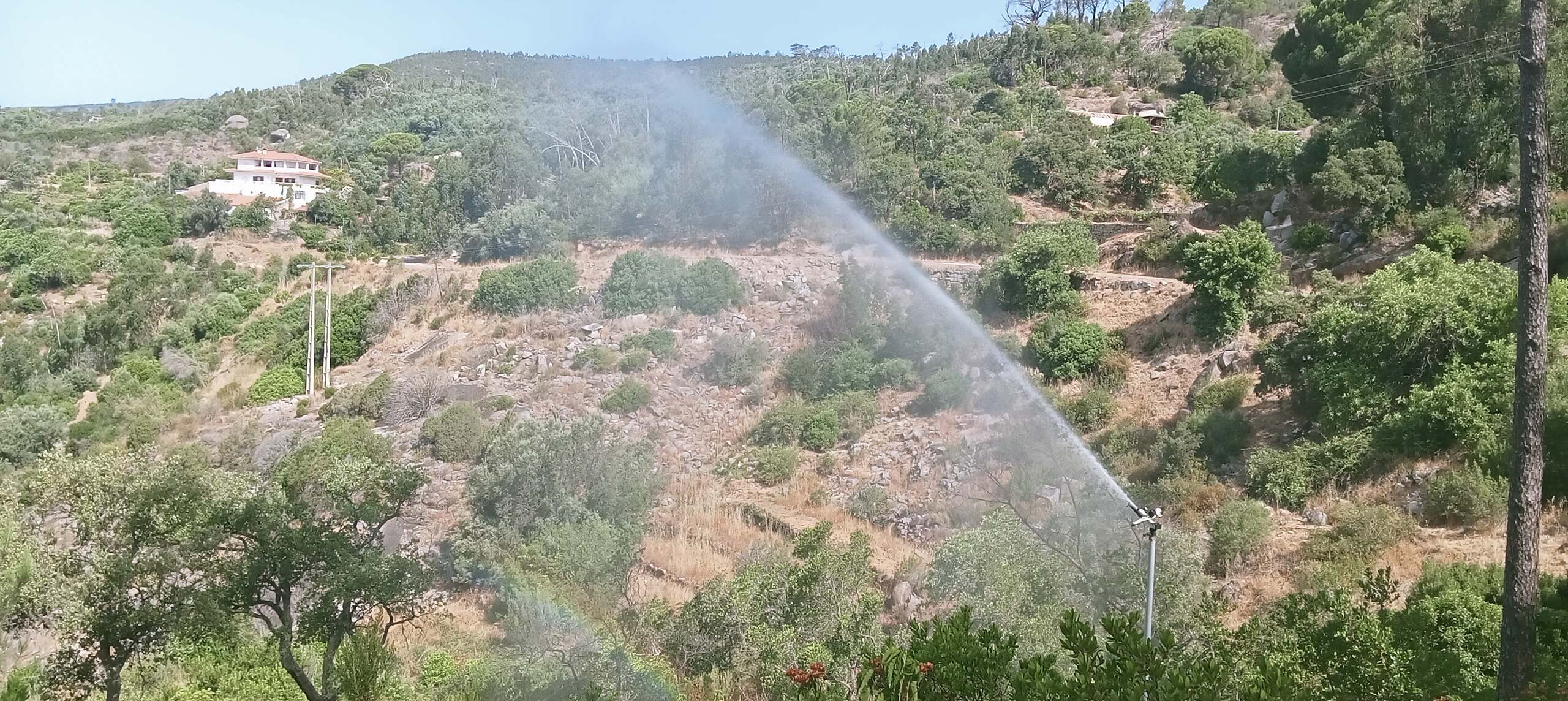
In winter, use your gutters to help you collect rainwater, so that you can then have a water reserve available in the dry summer when climate hazards and heat waves make life difficult. Collect this rainwater in cisterns… We are currently experiencing the hot phase of summer 2025. Climate-induced heatwaves from Africa, with temperatures of around 40 degrees Celsius, resulting in highs every two to three weeks that alternate with slightly cooler phases. Air masses are sent from northern Europe to Portugal in storm-like winds, making it impossible to enjoy life under peaceful weather conditions. Climate change has us entirely in its grip. A match struck carelessly in the forest, a discarded glass water bottle, even just a shard of so-called white glass, can trigger a forest fire with devastating consequences for human and animal life, for the forest and for agriculture. Carelessness is the number one cause of forest fires: a discarded cigarette end, or an accident involving a motor vehicle and a burning car, or a simple barbecue in the forest. There are many causes of forest fires, and the deliberate intention to start a fire further adds to the range of absurd reasons.
Summertime in the south is often party time. Holidaymakers drink a lot of alcohol, people dance, and the risk of forest fires increases. People let rip and become less aware of the dangers of forest fires. The hot phase of summer is also always the dry season, which only ends with the rain in October.
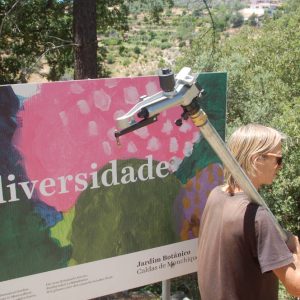 Here, at ECO123, we have survived five forest fires in Monchique since 1991, during which time we have gathered together valuable knowledge based on this experience. In 2020, through our commitment to nature conservation and the planting of a botanical forest garden, we came up with an idea that we christened with the name of WetNet. Before planting different species of native trees, we designed a protection system and installed it in the new forest, because we wanted to prevent it from falling victim to another fire. That was our plan. And what is the protection system required to do? It has to keep the fire at a distance and prevent it from destroying the newly-planted young trees. WetNet must wet the forest floor and keep the humidity in the atmosphere at a significantly high level. WetNet must certainly be made of fireproof steel, and the PET pipes must be laid underground. Since they transport the water and spray it into the forest in a fountain, they must also be made of fireproof material. We installed a protection system on a three-hectare plot of land, which cost us around 10,000 euros. We raised the money through a crowdfunding campaign and financed it entirely through subscriptions and advertising. ECO123 has not applied for any government grants!
 Every Saturday at 10 a.m., we turn on the WetNet and let it rain for 15 minutes in order to check that it is working properly. The system must be regularly maintained and therefore also tested. If you are interested in taking a closer look at this sprinkler system yourself, you are cordially invited to come and visit us. We will give you a guided tour of the still young botanical forest garden of Caldas de Monchique and show you how our WetNet system works. Count on spending an hour with us, and bring a towel with you, as you will need to dry off after the tour …


